Γεια σας!
Pronounced "yassas," this is both the most common Greek greeting and the most important word I learned. It can mean hello, goodbye, bless you, and more. So Γεια σας, and welcome to the blog I never thought I'd have, a summary of my months spent on the island of Rhodes!

Τρίτη 1 Μαρτίου 2011

Carnivale: Greek Village Style

It's the season for Carnivale! It's hard not to think of Mardi Gras and what I am missing at home this time of year. However, I still maintain that missing New Orleans Mardi Gras is worth it a thousand times over to be in Greece. Anyway, Carnivale season here is a bit different. Think...fewer beads, more cook-outs. Fewer drunks, more kids. We went to a celebration in a small village near Soroni. Despite less than ideal weather (what's new?), it was a lot of fun. Everyone was dressed up and the entire village (tiny!) was gathered in the center of...well, the villlage. The childern in costumes were adorable. And the dancing! So much dancing. I did not join in, but most of the other girls did. It was refreshingly traditional and a great way to spend the day.


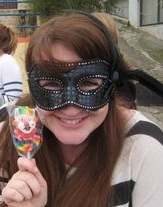
Plus, I got a free lollipop AND got to wear a mask!:

Soroni!

It's hard to talk about needing or wanting a weekend away when your entire life seems like a vacation. Be that as it may, getting away was what we all needed. And, so, we went to Soroni, a small village 40 minutes away from Rhodes Town. We stayed in apartments owned by Elias and his family for the night. Saturday was passed with...well, hours of flip-cup and ruit, really. Good times were had by all. 


In the spirit of Carnivale, we grilled for dinner. Burgers, souvlaki, and pork things that I don't eat (shocking!). Yum. 

Walking Over the Moat


No, that's not just an expression. Most of the bars and nightlife in pre-tourist season Rhodes are in the Old Town of the city. To get to Old Town, you literally must cross over the medieval moat. Very cool. 


The bars themselves are beautiful. The buildings in Old Town (the facades, at least) are all either original or restored stonework from 1309, before the Turkish invasion, so it's a far cry from the Boot. However, the bar culture is interesting. Loud music, open spaces, drinks, but no dancing. The point in the music being so loud you cannot think if there is no dancing? Not quite sure. Going out is a blast, though...partially because we've given up on not being the tacky Americans and dance anyway. Worth it? Yes.

Home aka the Semiramis


Living in a hotel is interesting, for sure.
Pros:
  ~ My bed gets made every day
  ~ Always somebody around to ask directions
  ~ Delicious hotel food
Cons:
  ~ Lack of fridge space!
  ~ ...yeah, that's all I got.


It's hard not to love living in a hotel and, as much as other people complain (yes, there are complaints!), I love the Semiramis. 

The Dragon and the Cat


To say the classes are stressful would be…well, honestly, it would be a blatant lie. The most stressful class by far is probably ceramics. Twice a week for anywhere from 3-4 hours at a time? Ouch. But, I made a dragon oil-lamp and a cat so far (it's cooler in person, I swear!). Getting to be 20 years old and play with clay is pretty excellent. Oh, and it will eventually breathe fire out of its nose, post-glazing. 
And, in all honesty, while the other classes certainly are not difficult, they are definitely interesting. Which is good.

Rodos!


WELCOME TO RODOS, RHODES!
First impressions: beachBeachBEACH! We are staying in the Semiramis Hotel, which is a whopping 70 meters from said beach. The Hotel is lovely, as is my roommate, Anne Marie. The weather isn’t nearly as warm as expected, but there is sun and no snow! So all is well.
Second impressions: Rhodes is confusing. The first full day there, Anne Marie and I got lost for almost two hours. The streets don’t make sense, there are no street signs, and the locals seem to all point in different directions (though they all speak English). The irony? Turns out we were about 6 minutes from the hotel the entire time, just walking in circles. Oops.

The Study Tour


To say the study tour was exhausting would be the understatement of the still-new millennium. We covered roughly 16 cities in less than 7 days; museums, ruins, and archaeological sites became the norm. Also the norm? Hours-long bus rides, not knowing where we were going, not eating for hours, a different hotel every night, and living on “Greek time” (read: flexible). Though it was sometimes frustrating, it was an incredible experience. Also, I used the words “incredible” and “unbelievable” so frequently that people started making fun of me. Whoops! Anyway, here’s a list of places and significance. 
  • Nemea: Site of one of the Pan-Hellenic games which were held every four years (alternating with the Pythian games at Delphi, the Olympic Games at Olympia, and the Iphistos games). We saw a Temple to Zeus Meliachios and the stadium. 
  • Mycenae: The ruins of Mycenae, one of the capital sites of Classical Greece renowned for its incredible wealth, were spectacular. In addition to stunning views, the ruins were one of the few sites where very little was blocked off. In other words, we got to walk through the Palace of Agamemnon, see the walls, and, in my case, play in the ancient ruins. Epic.
  • Epidauros: Though we didn’t see the Temple of Asklepios, god of Healing, we did get to sit in the most well-preserved theater in Greece. Sitting on the top row, you could literally hear a penny drop; seriously, we tried. Also tried? Singing the national anthem. Always embarrassing when a group of Americans doesn’t know the words to their own anthem…
  • Nafplion: We didn’t stop in this seaside town for long, only long enough to grab a meal. However, the view was lovely and we could see a large fortress looming ominously above us. Great effect. 
  • Olympia: It’s hard to express my awe at Olympia. The site is covered in ruins, by far the most extensive of what we had seen so far. The ruins of the Temple of Zeus are the intended high point, but what fascinated me more was the house where Phidias worked to create some of his masterpieces. Also high points: the ancient stadium and the statues of Kleobis and Biton (one of my favorite stories!) in the museum.
  • Nafpaktos: Ahhh, Nafpaktos. We didn’t actually stop here, just drove through. The most notable part of this town was the story Elias told us while driving through about how he met and courted his wife. Very cute. He did pause long enough to point out the fisheries we were driving by, though!
  • Delphi (town): Ohh, Delphi. My favorite stop by far. We stayed in a small hotel in the town for the night which was beautiful. The town is situated right on Mt. Parnassus and the views are spectacular. Delphi also marked the first night we went out! The town was dead, but there was a small bar. It was great to just hang out and decompress a bit. Plus, we all got free shots. 
  • Delphi (site): The next day, we originally weren’t going to be able to climb up to the sanctuary itself because it was…well, it was snowing. Apparently, snow is almost unheard of. But, thankfully, it let up and we were able to go up! The site was incredible. Seeing where the oracle sat, where the Athenians kept their treasury as a demonstration of power, where the very spot the Greeks had believed the center of the universe was…no words. Well, clearly a lot of words, but none nearly eloquent enough to describe what being there was truly like. Delphi was not only my favorite place in Greece, but one of my favorite places in the world. I only wish I had better pictures.
 .
  • Arahova: Back on the bus. We did not stop in Arahova, a small ski-resort town, but the drive through was great. The town was very cute and who wouldn’t want to ski down Mt. Parnassus? Definitely an eventual goal. 
  • Chaironea: No longer even a real town, Chaironea is primarily famous for being the birthplace of Plutarch. A quick stop, complete with a quick video and a quick museum was all the stop was, but it’s always inspiring to walk the same grounds as one of the most famous/well-regarded/influential historians of all time.
  • Thermopylae: The memorial built for the battle that most people know from the movie 300 is fairly awe-inspiring. That’s really all this site was, but we were treated to an in-depth telling of the history, once again, courtesy of Elias. 
  • Aiani: Not much to tell. Small archaeological site, near Dion, where we spent the night and went to a small museum. 
  • Meteora: The monasteries at Meteora are world-famous and, as I found out, for good reason. The monasteries themselves are incredible, beautiful works of architecture. But what is far more impressive is the natural beauty; the cliffs on which the monasteries are built are truly remarkable. 
  • Kozani: The ancient heart of Macedonia, we stopped here briefly. Not too much to tell. The only event worth noting in Vergina was the museum dedicated to Alexander the Great. The museum itself isn’t even really worth noting, except that they opened it especially for us. They also gave us juiceboxes while we watched a movie on Alexander. Some people thought it was juvenile. I thought it was excellent (and delicious!). 
  • Vergina: Vergina is home to arguably the coolest museum in the world. Completely underground, the museum displays the tombs of Phillip II and other members of the royal family along with all the treasures buried with them. 
  • Thessaloníki: The final stop on the study tour. A true city, compared by some to NYC (though I don’t agree, it’s way too European) and a great way to end. We dropped off the kids who were staying there for the semester at their apartments and explored for a while. For the first time, we had hours of free time to decompress and did just that. As great as it was, it was hard to be too sad about leaving. After all, next stop: RODOS!